
The judicial branch is headed by the Supreme Court of the United States, which interprets the Constitution and federal legislation. The Supreme Court consists of nine justices (including a chief justice) appointed to life terms by the president with the consent of the Senate. It has appellate jurisdiction over the lower federal courts and over state courts if a federal question is involved. It also has original jurisdiction (it serves as a trial court) in cases involving foreign ambassadors, ministers, and consuls and in cases to which a U.S. state is a party.
Constitutional Duties and Authorities
The judicial branch derives its powers from Article III of the Constitution. These powers are as follows:

Interpret laws
Determine a law's constitutionality
Resolve dispute
Protect individual rights
Leadership Structure and Divisions of Power
The judicial branches include a hierarchy of courts: the Supreme Court, the U.S. Courts of Appeals, and the U.S. district Courts, along with other specialized courts created by Congress. Judges in these courts are appointed by the President and Confirmed by the Senate, serving lifetime terms to maintain independence from political pressures.
Supreme Court Leadership
The Supreme Court is the highest court in the United States and serves as the ultimate authority on constitutional and federal law. It consists of nine justices: one Chief Justice and eight Associate Justices. The Chief Justice presides over the Court, sets the agenda, and represents the judiciary in interactions with Congress and the Executive Branch, while Associate Justices participate in hearing cases and issuing opinions. Justices are nominated by the President and confirmed by the Senate, and they serve lifetime appointments to ensure independence from political pressures.
Federal Courts Below the Supreme Court
- U.S. Courts of Appeals (13 appellate courts): These intermediate courts review decisions from district courts to ensure the law was applied correctly. Each court is led by a Circuit Judge, and panels of judges hear appeals within their geographic circuit.
- U.S. District Courts (94 trial courts): These courts handle federal cases at the first instance, with District Judges presiding over trials, evaluating evidence, and issuing verdicts.
- Specialized courts: Including the U.S. Court of International Trade, U.S. Court of Federal Claims, and bankruptcy courts, which handle specific types of cases with judges appointed for those purposes.
Administrative Leadership and Policy Oversight
Administrative bodies that manage operations and policy:
- Judicial Conference of the United States: Chaired by the Chief Justice, it sets national administrative policy, approves budgets, prescribes procedural rules, and oversees judicial discipline. Members include chief judges from each circuit and other senior judges.
- Administrative Office of the U.S. Courts: Provides program management, legal, financial, IT, and administrative support to federal courts and judges, under the supervision of the Judicial Conference.
- Federal Judicial Center: Offers education and training for judges and court personnel, conducts research on judicial processes, and develops programs to improve court administration.
- Circuit Judicial Councils: Comprised of active and senior judges, these councils review and approve local court rules, manage court resources, and oversee judicial conduct within their circuits.
Appointment and Tenure
Federal judges, including Supreme Court justices, serve for life unless they retire, resign, or are removed through impeachment by the House and conviction by the Senate. This structure ensures judicial independence, allowing judges to make decisions based solely on law and justice rather than political or public pressures.

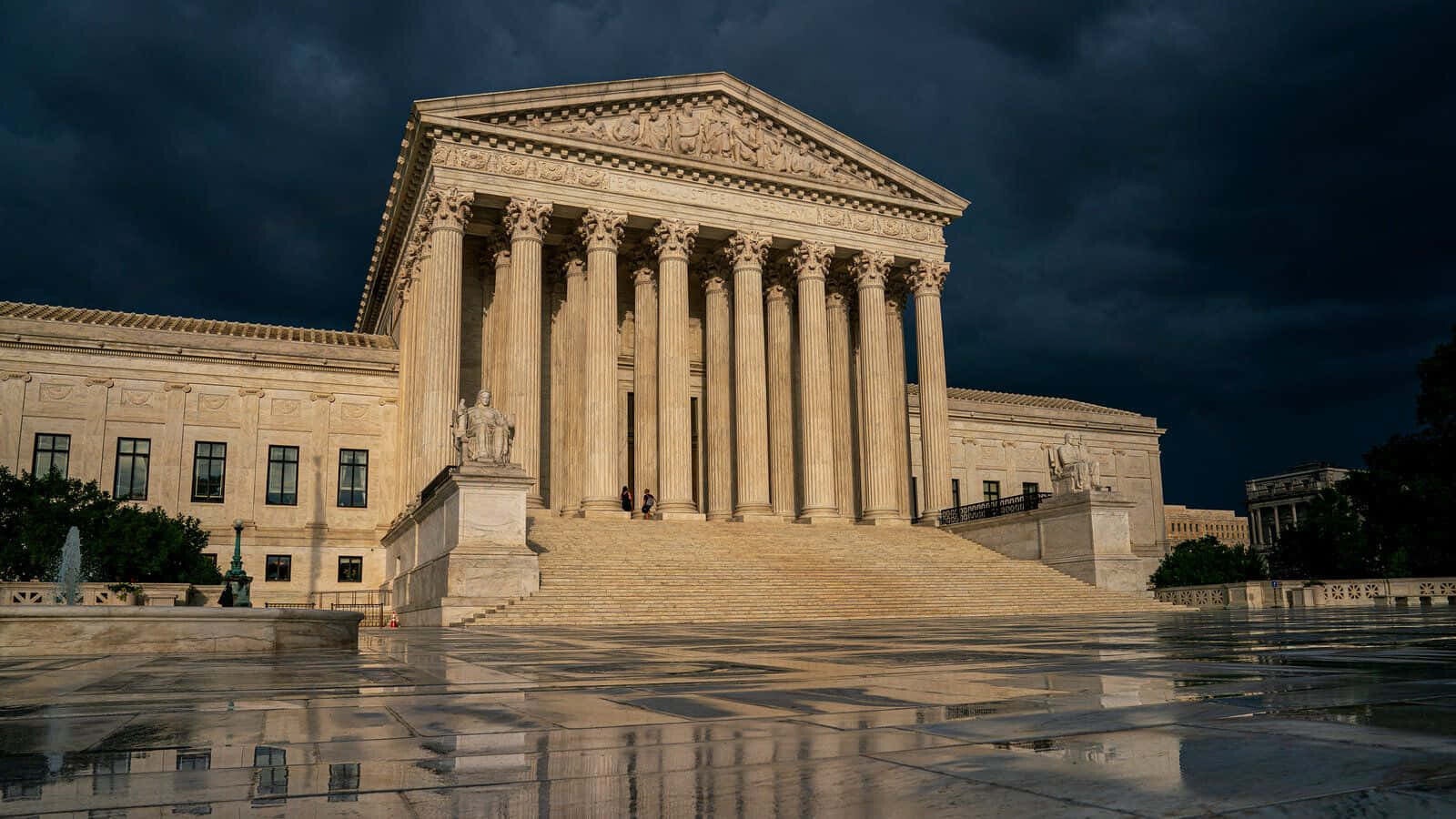
The Supreme Court
What is the Supreme Court?
The Supreme Court marks the boundaries of authority between state and nation, state and state, and government and citizen. The Supreme Court was created by the Constitutional Convention of 1787 as the head of a federal court system. Although the Constitution outlined the powers, structure, and functions of the legislative and executive branches of government in some detail, it did not do the same for the judicial branch, leaving much of that responsibility to Congress and stipulating only that judicial power be “vested in one supreme Court, and in such inferior Courts as the Congress may from time to time ordain and establish.” The court is vested with the authority to act in cases arising under the Constitution, laws, or treaties of the United States; in

disputes between states or between citizens of different states. In suits affecting “Ambassadors, other public Ministers and Consuls, and those in which a State shall be Party, the supreme Court shall have original jurisdiction”, it serves as a trial court. The Supreme Court is comprised of nine justices, these justices serve for life and their job is to: interpret the Constitution, review lower court decisions, and ensure justice in the federal judiciary.
Rules
The Supreme Court’s operations are governed by statutory rules made under the Supreme Court Act 1986, which outline the practice and procedure for both civil and criminal matters. These rules ensure that proceedings are conducted fairly, efficiently, and in accordance with the law.
- Preliminary Rules: Define the title, interpretation, and scope of the rules.
- General Provisions: Include reckoning of time, departure from rules, hearing procedures, and submission of heads of argument
- Electronic Filing and Service: Modern rules often provide for e-filing, electronic service, and indexing of documents to streamline court processes.
- Appeals from Lower Courts: Rules specify how to note appeals, prepare and serve records, apply for leave to appeal, extend time limits, and handle legal aid for indigent parties.
- Criminal Appeals: Include procedures for filing appeals, compiling charge sheets, transcripts, and judgments, and ensuring representation for serious offenses like murder or treason.
- Registrar Powers: The rules outline the powers of the Registrar, including issuing orders, certifying records, and managing logistics for hearings.
- Special Orders and Costs: Courts may issue special orders regarding costs, abandonment of appeals, or other procedural matters.
Procedures
Jurisdiction
The Court has original jurisdiction over cases involving disputes between states or cases involving ambassadors and other high-ranking officials. Its appellate jurisdiction allows it to review decisions from lower federal courts and state supreme courts, particularly when constitutional or federal statutory issues are involved.
Case Selection
Parties dissatisfied with lower court rulings may petition the Court for review, requesting the lower court to send the case record.
Oral Arguments and Opinions
Each side is generally allowed 30 minutes to present arguments. The Court does not hear witnesses or use juries; it relies on the record of prior proceedings and written briefs. During recesses, Justices deliberate, discuss cases in private conferences, and draft opinions. Opinions may be majority, concurring, or dissenting, reflecting the Justices’ interpretations of the law.
Decision-making Process
The decision-making process involves two major judgments. First, in a vote that is usually kept secret, the justices decide the merits of the case; then they issue the official written decision of the Court. The first judgment determines who will write the official decision. By tradition, the chief justice, if a member of the majority, decides whether to author the Court’s verdict and, if not which other justice will do so. If the chief justices is in the minority, the longest-serving member of the majority makes the decision-writing appointment.
Other Powers
Judicial Review
Judicial review is one of the court's and the branch's implied powers for it is never explicitly mentioned in the Constitution; instead, it was said by Marshall in Marbury v. Madison (1803), in which the Court struck down part of the Judiciary Act of 1789. Although since the late 19th century the vast majority of legal scholars have accepted judicial review as a proper power of the Supreme Court, critics have charged that the framers did not intend for the Court to exercise such power, which allows it to act in effect as a legislative body.
Create Your Own Website With Webador