
The U.S. Congress, the legislative branch of the federal government, consists of two houses: the Senate and the House of Representatives. Powers granted to Congress under the Constitution include the power to levy taxes, borrow money, regulate interstate commerce, impeach and convict the president, declare war, discipline its own membership, and determine its rules of procedure.
Constitutional Duties and Authorities
The legislative branch receives its powers from Article I which describes all of Congress's roles and responsibilities. Those powers are as follows:


Levy taxes
Borrow money
Regulate interstate commerce
Impeach and convict the president
Declare war
Discipline its own membership
Determine its rules of procedure
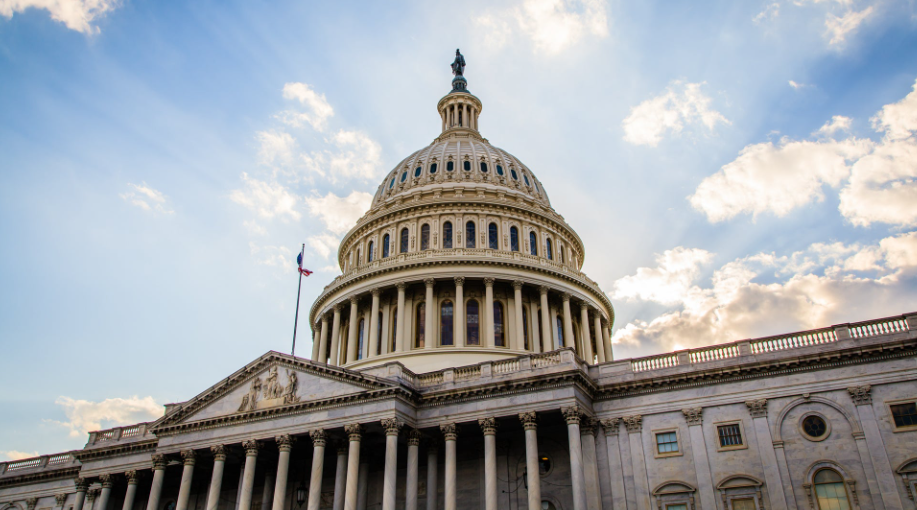
The Senate
Leadership Structure and Divisions of Power
The Senate is composed of senators that are elected by their respected state legislatures. Each state is given two senators and they are re-elected every 6 years.
119th Congress (2025–2027)
Majority Party: Republicans (53 seats)
Minority Party: Democrats (45 seats)
Other Parties: 2 Independents
Total Seats: 100
Majority Leader:
- The Majority Leader is the chief spokesperson for the party holding the most seats in the Senate. This leader manages the legislative agenda, schedules debates, and coordinates party strategy. The Majority Leader is elected by the party caucus at the beginning of each Congress.
Minority Leader:
- The Minority Leader represents the party with fewer seats and works to advance their legislative agenda. Like the Majority Leader, this position is also elected by the party caucus and plays a crucial role in coordinating strategies and responses to theMajority.
President pro tempore:
- This role is constitutionally defined and is typically held by the most senior member of the majority party. The President pro tempore presides over the Senate in the absence of the Vice President and is elected by the full Senate. This position is largely ceremonial but holds significant historical importance.
Vice President of the United States:
- The Vice President serves as the President of the Senate and can cast tie-breaking votes. This role is crucial during closely contested votes and adds a layer of influence to the legislative process.
Whip:
- Assists the leaders in managing party discipline and ensuring member attendance for votes, and various committee chairs who oversee specific legislative areas.
Powers and Procedures
Censure
Article I, section 5, of the U.S. Constitution provides that "Each House [of Congress] may determine the Rules of its proceedings, punish its members for disorderly behavior, and, with the concurrence of two-thirds, expel a member." Censure is a form of discipline used by the Senate against its members (sometimes referred to as condemnation or denouncement). A formal statement of disapproval, a censure does not remove a senator from office. Since 1789 the Senate has censured nine of its members.
Contested Senate Elections
The United States Constitution gives each house of Congress the power to be the judge of the “elections, returns, and qualifications of its own members” (Article I, section 5). Since 1789 the Senate has carefully guarded this prerogative and has developed its own procedures for judging the qualifications of its members and settling contested elections.
Declarations of War
The Constitution grants Congress the sole power to declare war. Congress has declared war on 11 occasions, including its first declaration of war with Great Britain in 1812. Congress approved its last formal declaration of war during World War II. Since that time it has agreed to resolutions authorizing the use of military force and continues to shape U.S. military policy through appropriations and oversight.
Expulsion
Article I, section 5, of the U.S. Constitution provides that each house of Congress may "punish its members for disorderly behavior, and, with the concurrence of two-thirds, expel a member." Since 1789 the Senate has expelled only 15 members.
Filibusters and Cloture
The Senate has a long history of using the filibuster—a term dating back to the 1850s in the United States—to delay debate or block legislation. Unlimited debate remained in place in the Senate until 1917, when the Senate adopted Rule 22 that allowed the Senate to end a debate with a two-thirds majority vote—a procedure known as "cloture." In 1975 the Senate reduced the number of votes required for cloture from two-thirds (67) to three-fifths (60) of the 100-member Senate.
Impeachment
Under the Constitution, the House of Representatives has the power to impeach a government official, in effect serving as prosecutor. The Senate has the sole power to conduct impeachment trials, essentially serving as jury and judge. Since 1789 the Senate has tried 20 federal officials, including three presidents.
Investigations
Congress has conducted investigations of malfeasance in the executive branch—and elsewhere in American society—since 1792. The need for congressional investigation remains a critical ingredient for restraining government and educating the public.
Nominations
The Constitution provides that the president "shall nominate, and by and with the Advice and Consent of the Senate, shall appoint Ambassadors, other public Ministers and Consuls, Judges of the Supreme Court, and all other Officers of the United States… (Article 2, Section 2)." The Senate has always jealously guarded its power to review and approve or reject presidential appointees to executive and judicial branch posts.
Treaties
The Constitution gives the Senate the power to approve, by a two-thirds vote, treaties made by the executive branch. The Senate has rejected relatively few of the hundreds of treaties it has considered, although many have died in committee or been withdrawn by the president. The Senate may also amend a treaty or adopt changes to a treaty. The president may also enter into executive agreements with foreign nations that are not subject to Senate approval.
Voting
The Senate takes action on bills, resolutions, amendments, motions, nominations, and treaties by voting. Senators vote in a variety of ways, including roll call votes, voice votes, and unanimous consent.
Rules
The Senate is governed by the Constitution, a set of standing rules, precedents established in the course of the legislative process, and special rules of procedure adopted by statute for particular types of legislation. These rules determine how bills and resolutions are moved towards passage, the structure of Senate committees, how debate proceeds on the Chamber floor, and how members cast votes.
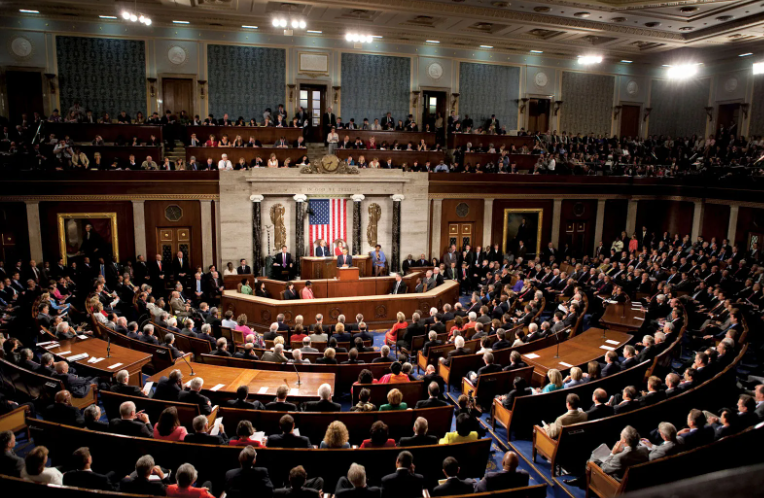
The House of Representatives
Leadership Structure and Divisions of Power
The majority party members and the minority party members meet separately to select their leaders. Third parties rarely have had enough members to elect their own leadership, and independents will generally join one of the larger party organizations to receive committee assignments. A party caucus or conference is the name given to a meeting of or organization of all party members in the House. During these meetings, party members discuss matters of concern.

Representative members are based on population, and each representative is elected to a two-year term serving the people of a specific congressional district. The number of voting representatives in the House is fixed by law at no more than 435, proportionally representing the population of the 50 states
Procedures
The Legislative Process

Rules
General Rules
Legislative Procedures: The rules dictate how bills are introduced, debated, and voted on. They outline the process for amending legislation and the time allocated for discussion, ensuring that all members have the opportunity to participate.
Voting Procedures: The House rules specify the types of votes that can be taken, including voice votes, recorded votes, and the procedures for calling votes. They also establish the quorum required for conducting business.
Role of the Speaker: The Speaker of the House has significant authority under the rules, including maintaining order during debates, deciding questions of order, and appointing members to perform the duties of the Chair.
Special Rules: The House Rules Committee can create "special rules" that allow for expedited consideration of specific legislation, setting conditions for debate and amendment. These rules can limit debate time.
Amendments and Revisions: The rules can be amended or revised as needed.
Decorum Rules
- Exiting or crossing the hall while the Speaker is addressing the House.
- Passing between the Chair and a Member under recognition.
- Wearing a hat (This provision was modified in the 116th Congress to allow religious head coverings).
- Using a mobile electronic device that impairs decorum.
- Remaining by the Clerk's desk during roll calls.
- Smoking.
Create Your Own Website With Webador